
 By
By 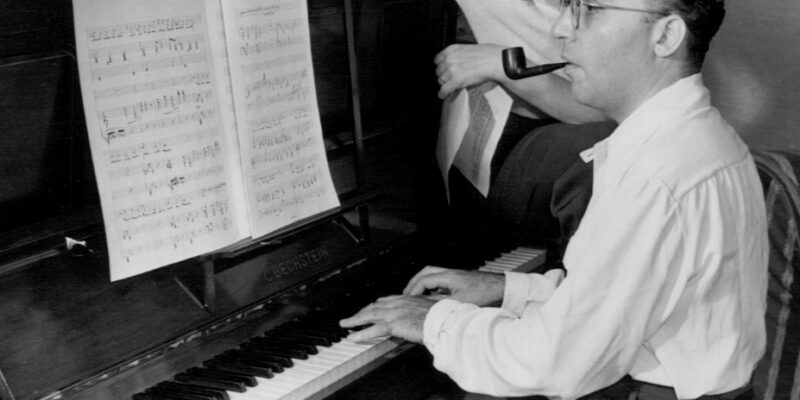
 By Judy Buchman-Ziv
For some 10 years, I wrote, directed and produced (such is synagogue life) with some help from my fellow-congregants and the office staff, musical Purim Spiels at my NYC synagogue, which incorporated musical parodies based on well-known Broadway tunes, mostly. Here and there, I would incorporate other well-known songs.
Over the years, I had parodies of songs from Cabaret, The Pajama Game, West Side Story, Gypsy and many others. Most of the songs were written by Jewish composers – such a tribute is important. After many years of hard work with a dedicated ensemble who loved doing the show every year, and after planning a move to Miami, I had decided to make my 2025 Spiel particularly special. Which Jewish composer would I choose? I chose the one whose music really left a mark on me personally and was unique, for various reasons.
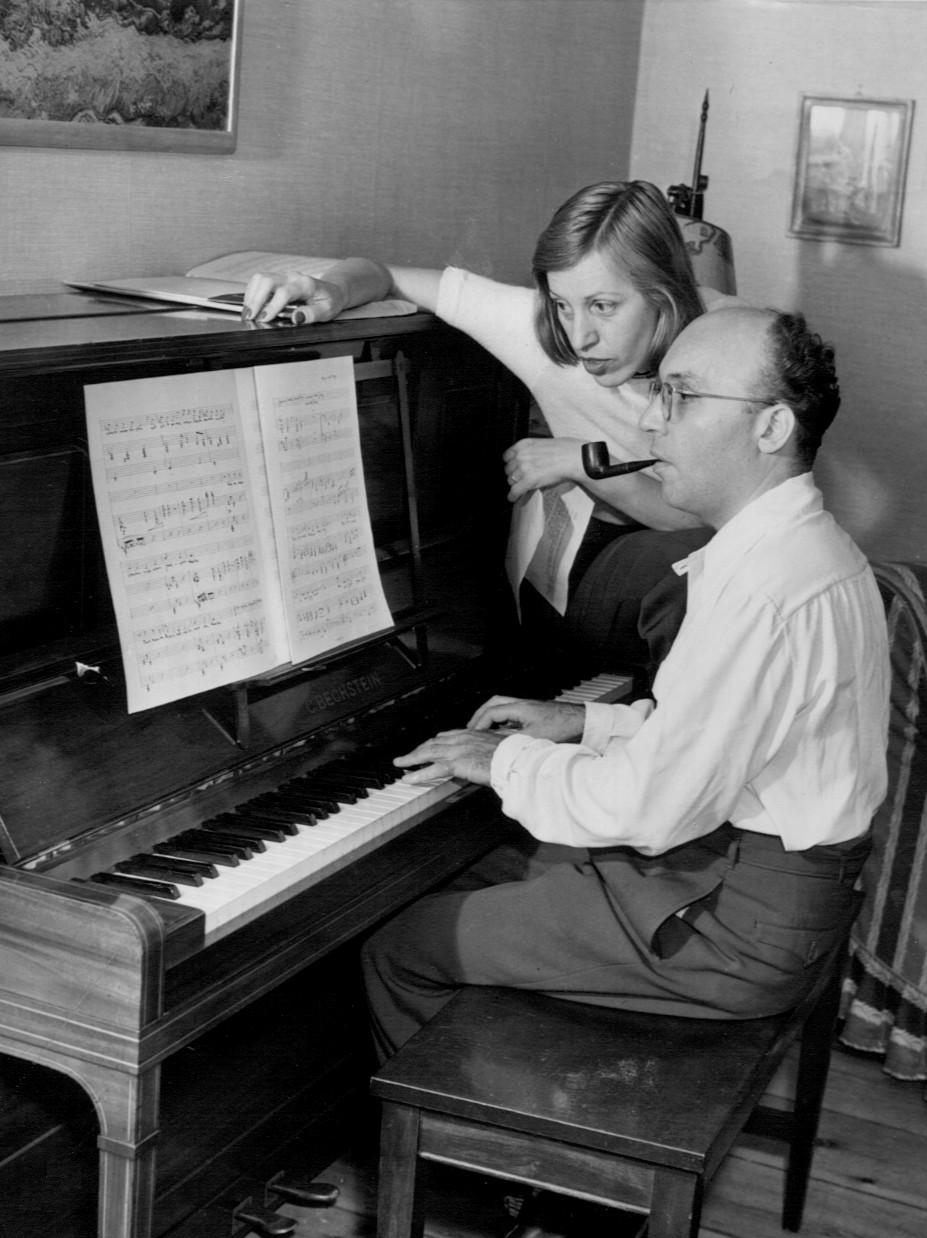
I incorporated several songs from “The Three Penny Opera” as well as the song Moon of Alabama from “The Rise and Fall of Mahagonny”. Do readers of a younger generation, who most certainly have heard the very popular songs, Mack The Knife, September Song and Moon of Alabama, know that they were composed by the extraordinary Jewish composer Kurt Weill?
Kurt Weil’s music is close to my heart for two main reasons. When I studied theater at Tel Aviv University from 1972-1976 [yes, I was there during the Yom Kippur War], I participated in a Hebrew production of “The Three Penny Opera”. It was challenging but fascinating to learn the Hebrew. It was always noted that there were many “yekkes” in Israel. Thus, the Hebrew translation from the original German was top notch. The music was so special that it resonated with me over the decades, leading me to include it in the Purim Spiel.
Weil’s harmonies are much more complex than Rogers and Hammerstein; not quite as catchy as Kander and Ebb, and contain dissonant and brash tones, even more than the opening of A Chorus Line. (The lyrics are by Bertolt Brecht.)
Our Spiel singers had quite a few challenges with some of the songs and perhaps it was to our advantage that the dissonant tones, if not quite reached, were indiscernible, due to their dissonance. All in all, our production was embraced by the congregation very positively.
Another reason Kurt Weil was special to me, is that he and his wife Lotte Lenya [perhaps you are familiar with her from various films and shows, including the James Bond film, From Russia With Love] after escaping Nazi German, made Rockland County, NY their home. I was born and raised in Rockland County, and heard stories about them from my parents.
Yes, Kurt Weill escaped Nazi Germany – and there been several shows written about him, including the Broadway show about his life, relationship with Lotte Lenya as well as his escape from Germany [LoveMusik (2007)]. It is most fortunate that he left Europe in time, to avoid the tragic fate of so many Jewish artists.
Kurt Weill’s life is detailed in Wikipedia, and I quote:
“Coming from a prominent Jewish family, Weill was officially denounced for his political views and sympathies, and became a target of the Nazi authorities, who criticized and interfered with performances of his later stage works.
Weill had ideals of writing music that served a socially useful purpose. His music has been recorded by many famous artists throughout the years, including Bobby Darin, Louis Armstrong, Nina Simone, The Doors, and others.”
I do hope that readers would consider listening to Kurt Weil’s music, or perhaps would include his music with any tribute performance about prominent Jewish composers, or maybe consider it for a humorous Purim Spiel.
And, as per our Spiel format, we always incorporated a song for the contestants vying for Achashverosh’s favor so as to be selected to be queen, I chose the “Jealousy Duet” from the Three Penny Opera.
Here is a snippet. I hope you have a great Purim Spiel, wherever you are!
CHORUS
Both: ACHY and me, he never would refuse me
Both: ACHY and me, and he will never lose me
1: He likes a nice petite girl
2: He likes a big complete girl
Both: Him leave me for a street girl?
Both: MEGUCHACH! מְגוּחָך!
Judy Buchman-Ziv holds a B.F.A from Tel Aviv University in Theater and has written two articles previously for L’CHAIM on other subjects.









Comments