
 By
By 
 By Sharona Shtienberg
Some people separate their family life, professional career and public service. For Talia
Kastiel-Katz, these three worlds are deeply intertwined. At the heart of each is the same belief: people need more than professional assistance; they also need someone who will see them, listen to them and help them feel that they are not alone.
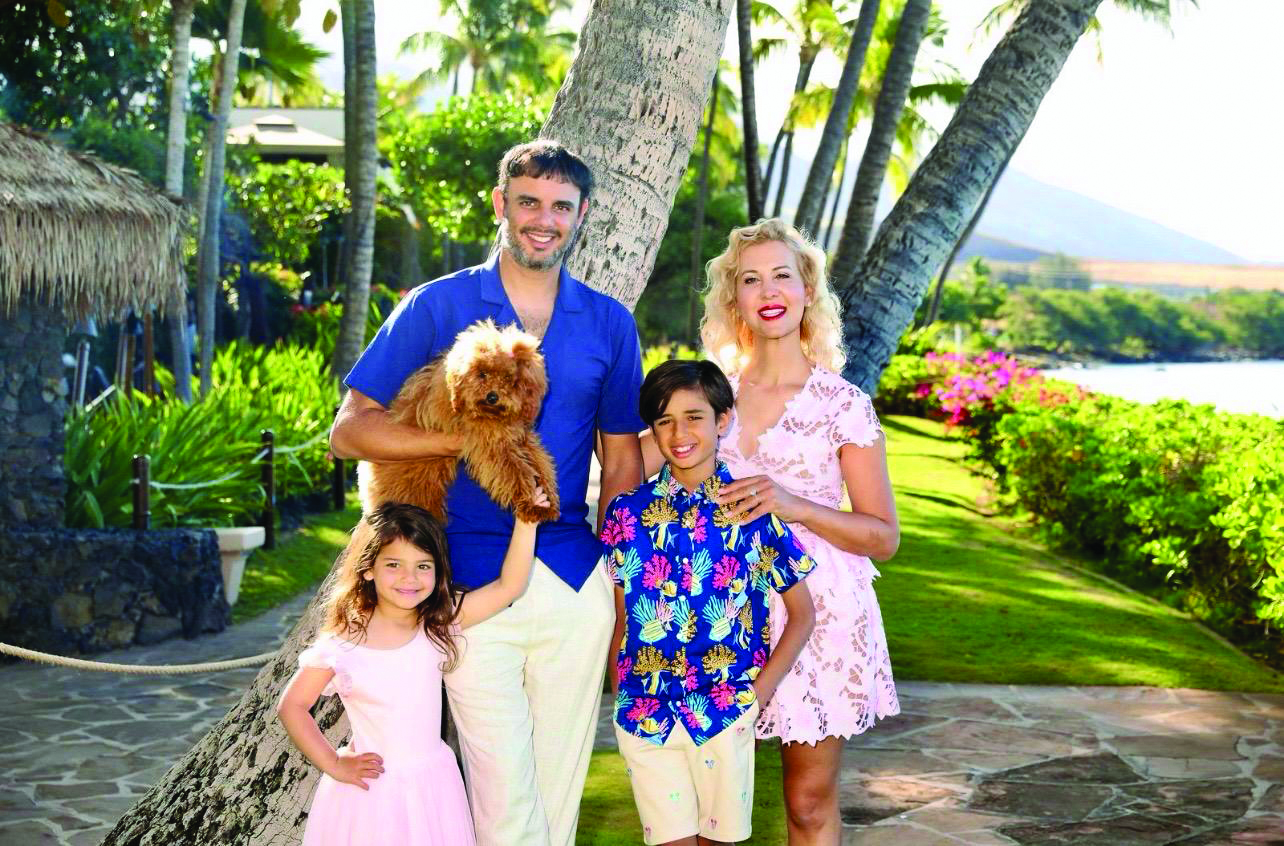
Behind her international career and public leadership is, first and foremost, a woman deeply devoted to her family. Family is not simply part of Kastiel-Katz’s biography; it is the compass that guides her work, shapes her approach to leadership and informs the responsibility she feels toward the Jewish and Israeli-American community.
It is no coincidence that she chose to dedicate her professional life to helping others become parents. She understands firsthand the longing to build a family and the emotional complexity of the journey. From that personal experience grew a professional mission through which she has accompanied thousands of families during some of the most sensitive and meaningful moments of their lives.
From a Personal Journey to a Life’s Mission
For more than 12 years, Kastiel-Katz, the CEO and founder of TCO Egg Donation and Chosen Egg Bank, has helped intended parents from around the world fulfill their dream of becoming parents.
The organization’s mission may sound simple, but it encompasses an entire world: helping create families with compassion, integrity, and a commitment to the highest medical and ethical standards.
There is no single age and no single type of family that faces infertility. Every person arrives with a different story, yet all share the same profound desire to build a family.
For Kastiel-Katz, the work begins where medicine alone is no longer enough. The families who come to her are not merely looking for a suitable donor or a professional solution. They want to understand what lies ahead, receive honest answers, and feel that someone is holding onto hope alongside them, even when the journey becomes longer than expected. That is why she created a model of close, personal guidance built on accessibility, transparency, and a deep understanding of each family and the story it carries.
Her commitment is also deeply personal. Through years of working closely with intended parents and guiding them through one of the most meaningful journeys of their lives, she has gained a profound understanding of the waiting, the uncertainty, and the need for a compassionate listener.
More Than a Medical Process: A Question of Identity
For Jewish families, egg donation may also raise profound questions of identity, tradition
and continuity. Many families, both religious and nonreligious, seek a Jewish egg donor because they wish to preserve a genetic, cultural, or religious connection to the generations that came before them. Some seek a donor of Ashkenazi or Sephardic background, while others are guided by a rabbi’s recommendation. For some families, knowing that the donor is Jewish helps ease, to some degree, the painful loss of the intended mother’s genetic connection.
Some Jewish donors also wish to know that the children born from their donation will be raised in a Jewish home and will be aware of their heritage. The halachic questions surrounding egg donation are complex, and rabbinic opinions differ regarding maternal status, the donor’s role, and whether conversion may be required. Kastiel-Katz emphasizes that it is not her role to determine Jewish law. Families are encouraged to consult their own rabbi or halachic authority, while the company works closely with physicians, attorneys and rabbis to help each family make a decision that reflects its beliefs and way of life.
The company has also developed a process designed for families seeking strict halachic oversight. Donors are reviewed by a rabbinical court to verify their Jewish status and marital status, and on the day of the egg retrieval, supervision by representatives of the Puah Institute can be arranged in the laboratory. This creates a clearly supervised process from beginning to end.
The goal is not to make decisions for the family, but to provide complete information, connect families with the appropriate professionals, and allow them to choose with confidence and in accordance with their values.
Getting to Know the Woman Behind the Donation
One of the company’s distinguishing features is the highly detailed donor database it offers families. The process begins with a personal introductory conversation during which the family learns about the expected stages, timeline, available options, and how to navigate the database. Just as importantly, the team listens to the needs, preferences, and concerns of each family.
Parents then receive access to hundreds of detailed donor profiles. Each profile may include information about height, weight, and physical characteristics; medical and family history spanning several generations; genetic information; educational background; interests, talents, hobbies, personality traits, and previous donations. Families also receive dozens of photographs of the donor at different stages of her life, from childhood to the present day, as well as a video in which they can see how she speaks, smiles, and presents herself. For many families, these details make the choice feel less abstract. They allow them, to some extent, to know the woman behind the profile and develop a deeper human connection.
The matching process is highly personal and considers medical and genetic compatibility, physical characteristics, family background, personal values, religious preferences, and the family’s goals.
Local Presence, Global Impact
What began as a response to a deep personal and human need has grown into an
international operation. The company’s main office is located on Fifth Avenue in Manhattan, with additional offices in Los Angeles, San Diego, and Tel Aviv. It serves families from the United States, Israel, Canada, Australia, Europe, South Africa, and other parts of the world.
Despite this growth, Kastiel-Katz is committed to preserving the personal approach that has characterized the company from the beginning. Behind every case is a human being: a woman who dreams of becoming a mother, a couple that has traveled a difficult road, a donor who has chosen to give of herself, and a family waiting for life-changing news. She also hopes to change the way the community speaks about infertility. Although millions of people around the world experience it, infertility is still often accompanied by shame, loneliness, and silence.
Within close-knit communities, the pressure to keep the struggle private can be especially intense. In Kastiel-Katz’s view, change begins by replacing silence with compassion and understanding. The more openly the subject is discussed, the more people recognize that they are not alone and that asking for help is not a sign of weakness, but an act of courage.
From Building Families to Building Community
For Kastiel-Katz, October 7 was more than a national tragedy. It was a deeply personal wake-up call. In the days that followed, she felt an overwhelming need to do more. More than supporting Israel from afar, she wanted to strengthen the people around her, bringing families together, creating spaces for connection, and helping build a community that would stand united in moments of crisis and in everyday life alike.
The same worldview led Kastiel-Katz to become involved with the Israeli-American Council (IAC). Today, she serves on the organization’s National Board and leads the IAC board and council in San Diego. For her, this is not merely a representative position. It is a natural extension of the mission that guides every part of her life: building spaces in which people feel that they belong, are supported, and are connected to one another.
The IAC is the home for Israeli Americans and pro-Israel communities across the United States. Since its founding in Los Angeles in 2007, it has grown into a national movement operating from coast to coast across dozens of communities, connecting families, leaders, young people, and partners around a shared identity, communal responsibility, and a deep connection to Israel.
For Kastiel-Katz, the strength of the IAC lies in its ability to transform this national reach into genuine community power; a force that stands beside people at the moments when they need it most. Since October 7, the organization has mobilized thousands of families, leaders, and volunteers, strengthened communities during a period of pain and uncertainty, and provided a framework through which they could unite, raise their voices, and proudly stand with the State of Israel.
At the same time, the IAC stands beside families and communities confronting rising antisemitism and a growing sense of insecurity in schools, on college campuses and in public spaces. Through educational, communal and civic initiatives, including its IAC MAGEN, the organization gives children, teenagers and parents the tools to understand the world around them, strengthen their identity, and act with confidence, responsibility, and pride.
In San Diego, Kastiel-Katz works alongside board members, local leaders, volunteers, families, and partners to expand community engagement, strengthen the connection to Israel, and build a community infrastructure that will serve both this generation and those that follow.
Our Shared Responsibility to Build a Strong Community
Kastiel-Katz Kastiel-Katz’s journey connects personal success with communal responsibility. For someone who has dedicated her life to building families, the transition to building community was a natural one: using the experience, abilities, and relationships she has developed to open doors for others and strengthen the next generation.
This vision will be at the heart of the IAC San Diego Gala, which will take place on September 3. The evening will celebrate the people who build the community throughout the year and raise the resources that will allow the IAC to continue investing in families, children and teenagers: our future generation and the resilience of San Diego’s remarkable community.
For Kastiel-Katz, the gala is not merely a festive evening. It is an invitation for every person to take part in our shared responsibility: to build a strong community, deepen identity and belonging, stand with Israel, and ensure that the next generation has a home in which it can grow with confidence and pride.
“I invite you to take part in shaping our present and our future as a community,” Kastiel-Katz says. “Ultimately, the meaning of life is found not only in what we build for ourselves, but also in what we help others build families, communities and a shared Jewish, Israeli and American future. We do this for our children, for American democracy, and for the future of the State of Israel. No one will do it for us. This is our moment, and this is the personal example we want to set for our children and for the world.”
This year, the IAC San Diego Gala will recognize Talia Kastiel-Katz as one of its honorees, celebrating not only her professional achievements, but also her extraordinary leadership and unwavering commitment to strengthening the Israeli-American community in San Diego. Through her work, she has shown that building families and building community are ultimately part of the same mission.





Comments