
 By
By 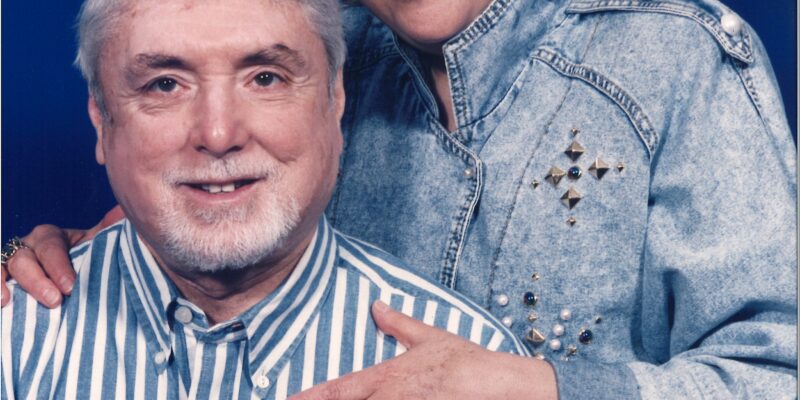
 By Franklin Felber and Diana Lerner
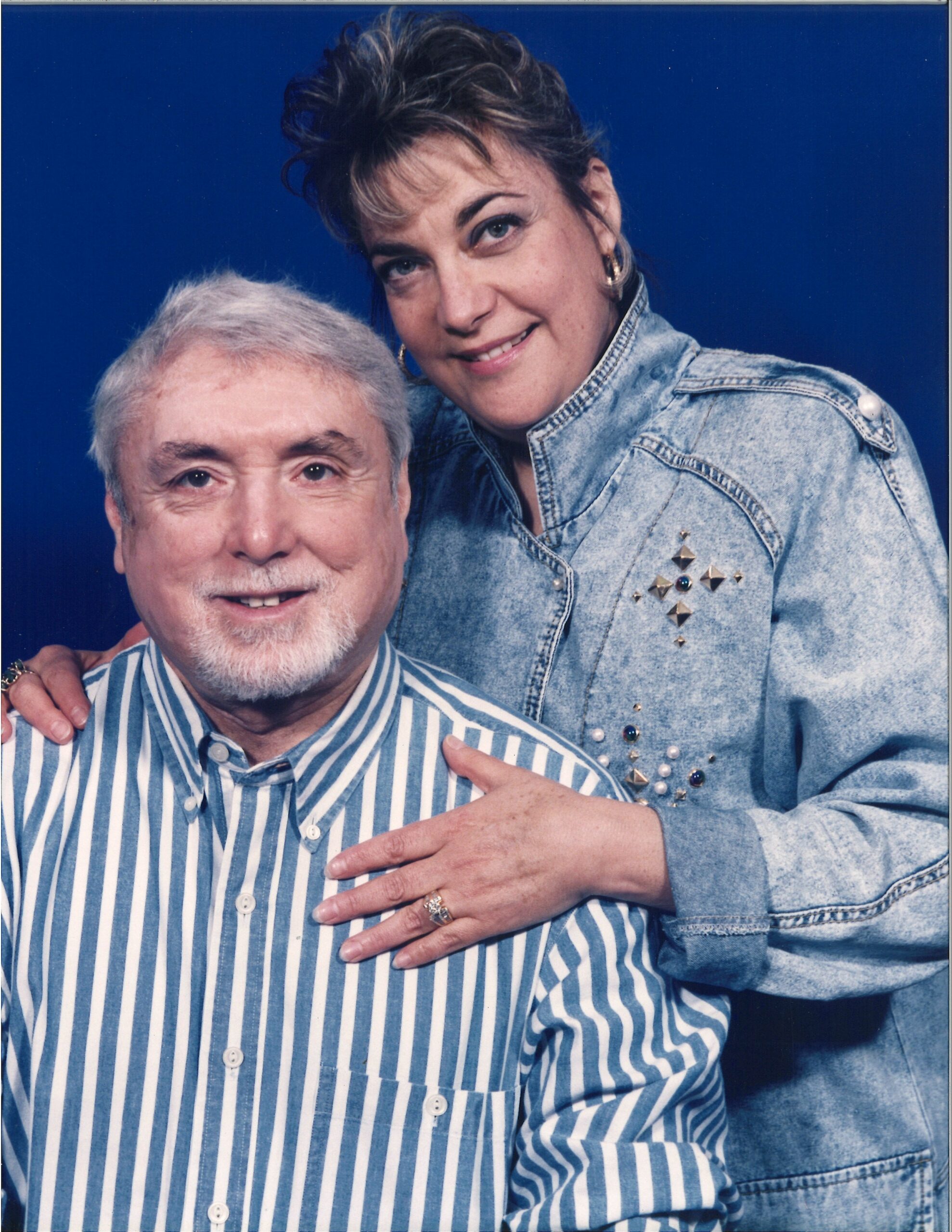
For 40 years, Albert Kadosch and his wife, Patricia, were a beacon—a love story and an inspiration—for the Jewish community in San Diego, embodying devotion and the highest ideals of hospitality.
Albert’s voice was the spiritual anchor of countless community milestones. At weddings, bar and bat mitzvahs, and funerals across San Diego, his rich, classically-trained tenor elevated every occasion. With a commanding triple cry of “Ya’amod, YA’AMOD, YA’AMOD!” he summoned a young man to the Torah, his voice driving home the spiritual significance of the moment. At funerals, his mournful rendition of the El Malei Rachamim (God, Full of Compassion) offered solace as he helped lay a Jewish soul to rest. Every Friday night at Chabad of Poway, the sanctuary swelled with his unforgettable signature song, Mizmor L’David, the climax of the Psalm cycle, preparing every worshipper for the welcoming of Shabbat.
In the spirit of our first forefather Abraham, Patricia and Albert exhibited boundless hospitality. Their Poway home was the joyful center for Friday night and holiday dinners. Patricia, with her warm Southern grace, and Albert, a culinary artist, created memorable feasts. His lovingly crafted Moroccan dishes—aromatic with exotic spices and accompanied by warm, home-made Moroccan anise challahs—transformed every gathering into a celebration. Long after the children had fallen asleep at the table or on the living room couch, their parents lingered, enjoying animated conversations around the table.
Though they had no children of their own, Patricia and Albert adored them, and children reciprocated with instinctive love. Despite his blindness, Albert’s face would light up brightly when a child ran up to him for a hug or when a baby was brought to him for his gentle caress. Their affection was generational. They held babies in their arms whose parents they had held as babies decades earlier.
Albert’s background was as rich and complex as his voice. He was born on his father’s horse farm near Tangiers in Spanish Morocco, tracing his lineage back to the expulsion of Jews from the Cordoba and Toledo regions during the Spanish Inquisition of the 15th century. Genealogical analysis confirmed his 100 percent Spanish Jewish ancestry; for five centuries in Morocco, his family had married only within their exiled Spanish community. His surname, Kadosch (meaning “holy” in Hebrew), even suggests an ancestry connected to the major Jewish migration to biblical Tarshish (current-day Spain) that followed the Roman Dispersion in 70 C.E.
His classical Hebrew education began at age three in Spanish Morocco, where discipline forged a phenomenal memory that would serve him well, after he lost his sight. He had memorized virtually the entire siddur (prayerbook), including the intricate holiday variations. His cantorial skills were unmatched, honed over 20 years by Georges Thill, one of the 20th century’s greatest French lyric dramatic tenors. This powerhouse combination of memory, operatic training, and fluency in multiple languages led to his being invited to participate in Passover services internationally, most recently in Morocco in 2019.
Albert’s blindness did not constrain his creativity—it sharpened it. He learned ways to paint with watercolors by shaping thin, putty-like strips into outlines of figures, creating beautiful artwork that graced his home, materials for the Braille Institute, and even the cover of his children’s underwater-fantasy tale, Cosimo and Cosima Discover the Green Empire, published in 2017. His award-winning sculpture of the Hunchback of Notre Dame is etched in the memory of all who saw it.
Beyond the arts, Albert excelled in practical sciences. Turning his heightened sense of touch to an advantage, he focused on healing as a physical and psychomotor therapist. As a totally blind graduate student, he had earned two master’s degrees at Columbia University, in motor learning and neuropsychology, by hiring assistants to read textbooks to him not available in Braille.
Patricia was a Southern girl born in Oak Ridge, Tennessee, where her father worked at the top-secret uranium enrichment plant after his service as a fighter pilot in the British Royal Air Force in World War II. Her family moved often throughout the South, where she was frequently the only Jewish student in her class.
The joining of these two culturally divergent souls was as unlikely as it was inevitable. In 1970, Patricia moved to Israel to study Hebrew. When she found the Hebrew language ulpan in Haifa was full, she switched to an ulpan in Jerusalem. At lunch, there was one empty seat. This beautiful, young Southern woman sat herself next to a dashing Frenchman—a Moroccan-born, seven-language-fluent, operatic tenor and skilled French/Moroccan chef, who had been blinded in battle. He was the most exotic and handsome man she had ever met. Two years later, they married in France. Their love for each other grew ever stronger over the next half century.
The respect, affection, and abiding love between Patricia and Albert served as a living model for generations of friends and acquaintances in San Diego. For Patricia and Albert, marriage was a sacred covenant, offering many more opportunities for them to perform acts of loving-kindness every day.
Three years before his death, Albert suffered an incapacitating stroke and required caregiving. As Albert fought to recover from this stroke, Patricia’s only goal was to care for him with dignity, respect, and all her love. Patricia calls these years of intensive caring for her beloved husband “the greatest blessing of my life.”
In October, Patricia lost the love of her life, and the Jewish community of San Diego lost an uplifting and inspirational figure.
Whenever Patricia would leave Albert, even for a brief errand, he would say to her, “A la paz de Dios,” which means, “May the peace of God be with you.” When this phrase is combined with “mi vida, mi alma” (“my life, my soul”), it becomes a profound blessing, placing someone you love under the protection and tranquility of the Divine, while calling them your life and soul.
Today, Albert lies beneath a massive stone monument on a windswept hilltop in Beit Shemesh, in the land to which he had always dreamed of returning. On the monument, Patricia has these words engraved as an eternal tribute to his warrior spirit and their everlasting love:
My Beloved
Warrior and Fighter
With Wisdom
And Faith In G-D’s Plan
You Met Every Challenge
And Overcame
Every Adversity
A La Paz De Dios
Mi Vida Mi Alma



Comments