
 By
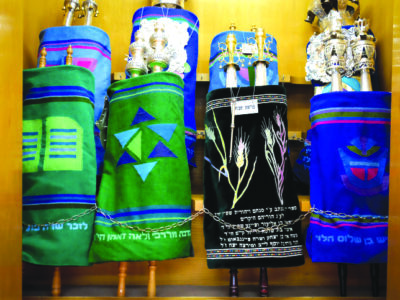
By It is easily the most eagerly anticipated moment of the High Holy Days. We have arrived at Erev Yom Kippur, the evening that opens the Day of Atonement. The cantor stands before the congregation flanked on either side by two members of the community, each holding a sacred Torah scroll adorned in a white cover. The congregation rises. There is a dramatic pause. Then the cantor begins to chant:
Kol nidre… v’esarei v’charamei, v’konamei v’chinuyei, v’kinusei u’sh’vuot… (All vows… resolves and commitments, vows of abstinence and terms of obligation, sworn promises and oaths of dedication…)
Three times the Kol Nidre will be chanted, first in a soft voice as if approaching God in quiet reverence, then louder and louder as we grow in confidence. The repetition allows latecomers to be included in the recitation of this most important declaration.
Kol Nidre is actually not a prayer. There is no praising or thanking God, no requests for God’s mercy or intervention, all of which are the hallmarks of traditional Jewish prayer. Instead, it is an Aramaic legal formula, borne out of the desire of our ancestors to nullify any personal vows that were made in the previous year that went unfulfilled. Similarly, it contains language that nullifies any vows we make from this day through the coming year that we may not be able to fulfill. Seven types of promises are stated combined with seven verbs that express “nullification.” The number seven is meant to symbolize completion, in the same vein as God creating the world in six days and resting on the seventh.
Although the actual source of the words of the Kol Nidre is unknown, it likely originated in the 6th or 7th centuries in Babylonia, as it bears similarity to contracts used in the Jewish community during that time. The familiar melody heard in Ashkenazic synagogues originated in the German Rhineland sometime between the 11th and 15th centuries, part of a collection of melodies known as MiSinai tunes—chants so ancient and commonly sung that they seem as though they were handed down to the Jews at Mount Sinai. Sephardic Kol Nidre chants, however, have much more variety, so what you hear in one synagogue may be quite different from what you encounter in another.
On the High Holy Days, our intentions to improve our behavior are often grand. With a sincere heart, we anticipate being able to fully live up to our promises: put down our electronic devices and spend more time with our families, eat healthier foods, exercise more frequently, or whatever tops our list in the current year. Yet life has a habit of getting in the way, and sometimes we are simply unable to fulfill our vows. In other words, we are human and fallible.
While I encourage you to make your most sincere effort to live up to your promises for the coming year—to your loved ones, your community, and to God—know that you may stumble. In fact, we are all likely to fall short of our personal expectations. But that is the time to reach deep inside and find a way to push forward, reach higher, dig deeper. These are the moments when we may discover that we have the capacity to exceed even our own expectations.
G’mar chatimah Tovah—May each of us be inscribed and sealed in the Book of Life.



Comments