
 By
By 
 By Deborah Vietor
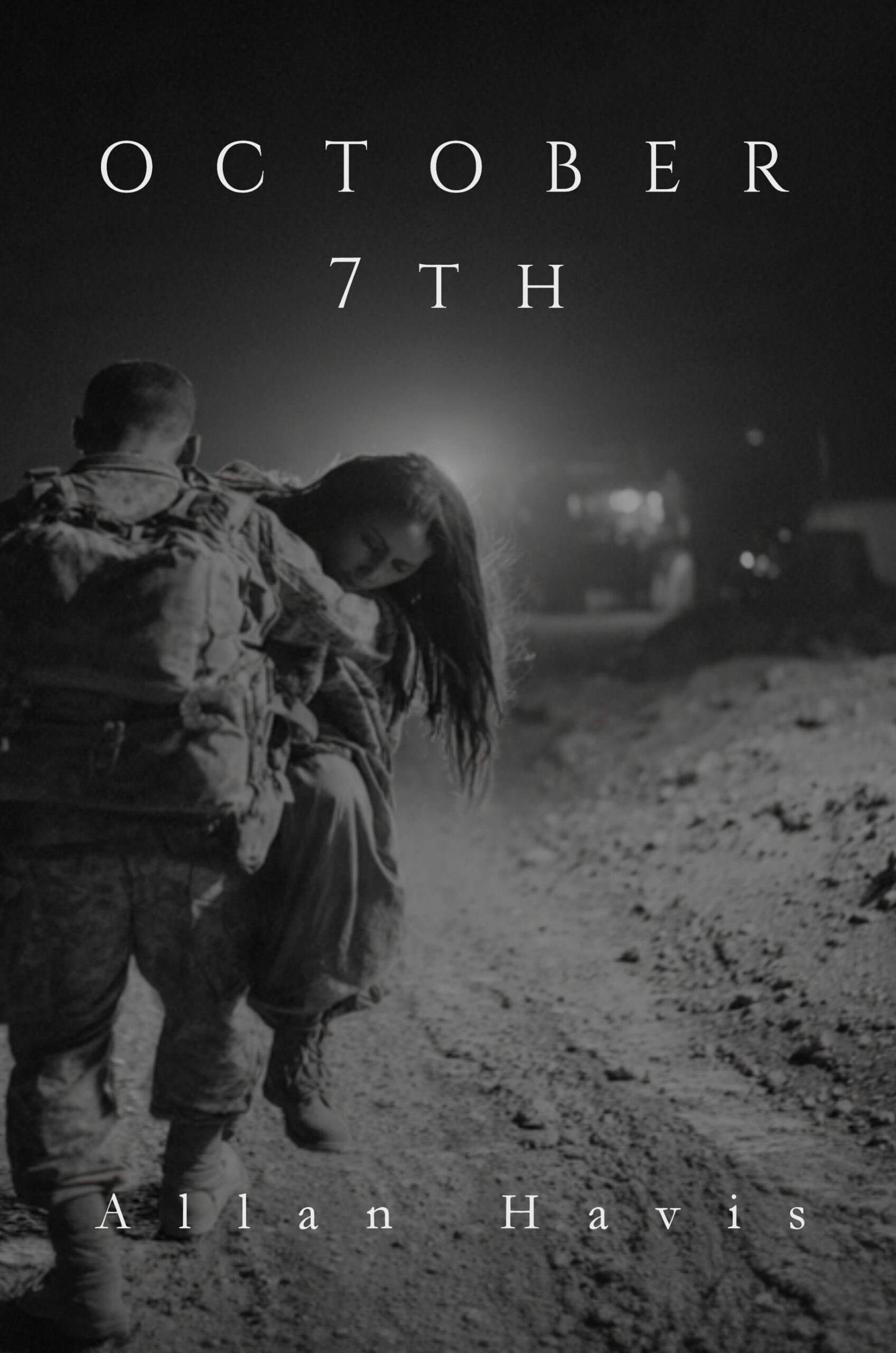
Allan Havis takes readers on a deep and compelling journey into the period before, during and after the shattering events of October 7 in Israel. OCTOBER 7TH–A Novel is an ambitious work, whose themes include ideological radicalization, antisemitism, captivity, political violence, family division, moral complacency and the difficulty of sustaining human connection in a time of fear and conflict.
The October 7 attack and its aftermath profoundly affected Havis and led him first to create a 90-minute play. Yet the story held more characters, histories and intersecting conflicts than a drama could fully contain. He reconsidered the project as a literary novel, using the wider form to explore a larger range of lives and the complicated moral terrain in which they move.
The novel opens in Gaza and enters a world marked by trauma, brutal captivity, ideological conflict, and the consequences of violence. It does not offer readers a simple or comfortable path. Instead it asks them to confront lives altered by political extremism, inherited belief, personal grief, and fear of the other. The setting is urgent, but the novel’s concerns extend beyond a single place or event. Havis is interested in how individuals come to accept, resist, or question the ideas that shape them.
Havis draws his characters with the instincts of an accomplished dramatist and the care of a novelist. At first, readers encounter them through vivid and distinct impressions; as the narrative develops, their deeper fears, hopes, ambitions, loyalties, strengths, frailties and fates emerge.
The novel follows a dozen principal characters whose lives touch, diverge, and sometimes collide in unexpected ways.
Among them are a renowned Jewish corneal surgeon, her daughter and the daughter’s girlfriend, members of the surgeon’s extended family, an IDF soldier, captors, a controversial podcaster and his associate, a doctoral student from the Middle East and a Lebanese author whose rhetoric influences students and public conversation. Havis uses this wide cast not merely to present competing positions, but to show the emotional and personal pressures beneath them.
The characters occupy sharply different political, religious and cultural worlds. Some are shaped by idealism; others by resentment, personal loss, fear, ambition, or the need to belong. The novel recognizes that people can become trapped psychologically as well as physically—by dogma, trauma, social expectation, and the conviction that their own viewpoint is the only moral one.
One character observes, “The way idealism hardens into vigilance.” That thought resonates throughout the book. OCTOBER 7TH examines how deeply held beliefs can harden into certainty and how certainty can make empathy, conversation, and self-questioning increasingly difficult. It also asks what happens when public rhetoric, media voices, and online personalities inflame fear or turn suffering into spectacle.
The book’s movement among locations, dates, beliefs and actions is intentionally complex, reflecting the interwoven lives and competing narratives it portrays. Readers are asked to follow a large moral and emotional canvas, one in which no character’s choices occur in isolation. As the narrative unfolds, Havis repeatedly returns to the possibility of dialogue across divisions that might otherwise appear impossible to bridge.
If a writer shaped by fundamentalist ideology can enter into an unlikely conversation with a liberal Jewish physician about Israel, identity, history, and responsibility, can readers also find a way to listen more carefully? If a young woman returns from a Birthright trip with beliefs different from those of her family and friends, what happens to the relationships on which she has relied? These questions are not easily resolved, but they invite reflection rather than retreat.
The novel also asks readers to consider antisemitism and Holocaust denial, as well as the role public voices can play in spreading hatred or indifference. When influential figures use their platforms to distort history, diminish suffering, or deepen divisions, what responsibilities do listeners, readers, and communities have? Havis does not reduce these questions to slogans. He uses fiction to bring their consequences into intimate human focus.
By dismantling inherited biases, does this novel surpass storytelling—does it challenge us to expand education on Jewish history and the Holocaust as a vital pathway to raising our collective awareness?
These are only some of the questions raised in this thought-provoking and timely novel.
Join Allan Havis for a free, catered book talk at UC San Diego’s Faculty Club Oct. 8. Reservations are available through UC San Diego’s online event calendar at
https://calendar.ucsd.edu/event/book-talk-with-allan-havis-october-7th-newly-published-novel.






Comments